Intermittent Fasting has become a popular trend in the food and fitness worlds. Many people swear by it and claim they will never waiver from it. Others claim it is a fad, just like any other diet, that is not sustainable for the rest of your natural life. The catch about the intermittent fasting trend is that, unlike other diets or fads, it does not restrict the foods you eat. No juicing, cleansing, detoxing, or any other type of dietary restriction. Intermittent fasting is said to allow you to EAT ANYTHING.
What is intermittent fasting?
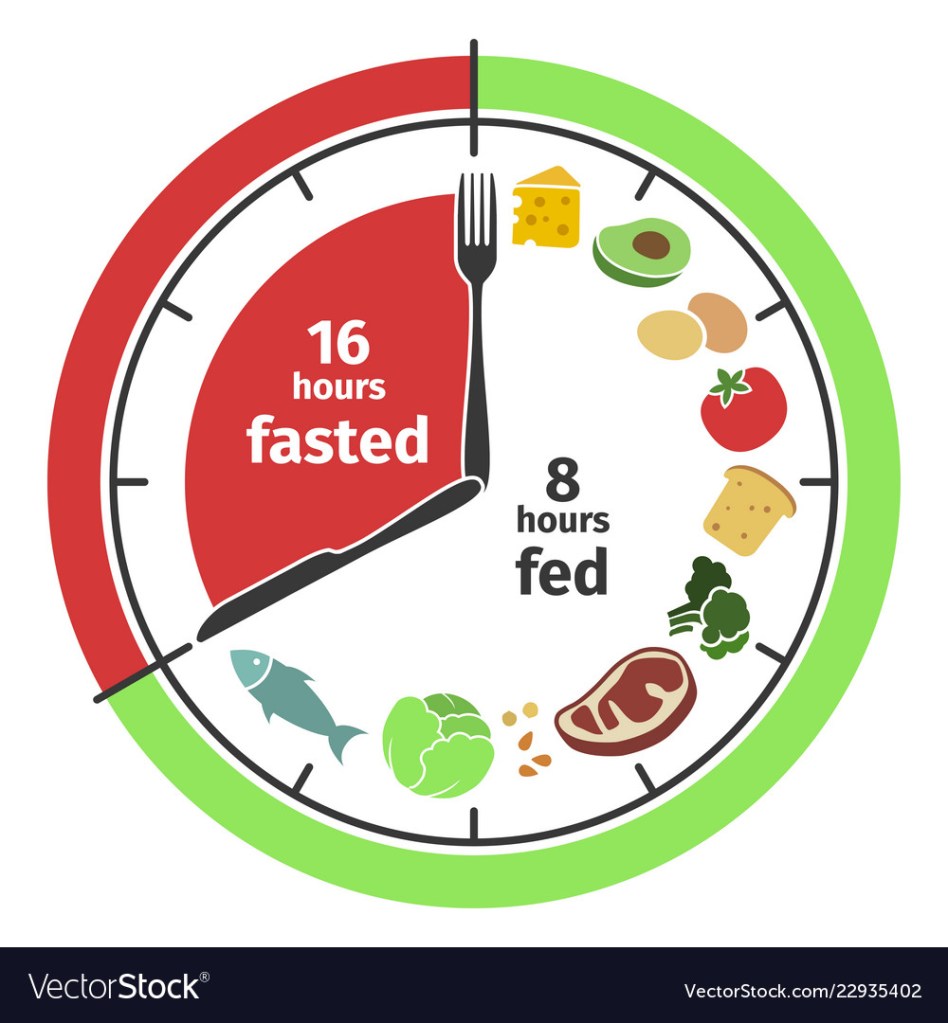
Intermittent fasting is a planned pattern of eating where on fasts in the early hours of the day, for approximately sixteen hours, and then breaks their fast in order to eat a sufficient amount of proteins, carbs, and fats but not allowing themselves enough time to eat in a calorie surplus. Therefore the intermittent fasting participant is on track to lose body fat/weight due to eating in a caloric deficit consistently.
How is it Different From Fad Diets?
Rather than focusing on specifically on the type of food that you eat. Intermittent fasting focuses on the eating schedule in, other words, when you eat and don’t eat. There are different methods of intermittent fasting, the most common are sixteen hour fasts on a daily basis and 24 hours fasts two out of seven days per week. Therefore the intermittent fasting trend revolves around splitting the days or weeks into non-eating and eating portions.
Types of Intermittent Fasting Breakdown
These are the three most common types of intermittent fasting:
Type 1 Is, as previously discussed, the 16/8 hour plan. Also known as the “Leangains protocol” (Kris Gunnars, 2018) it encases not eating in the morning hours and breaking your fast after 16 hours. The earlier you wake up, the earlier you can begin to eat for the day. This method can be utilized safely everyday.
Type 2 is a traditional full day fasting technique used twice in one week.
Type 3 can be a way to get used to intermittent fasting before starting to try longer fasts. This method allows for 500-600 calories on two days of the week, making sure they are not consecutive, and food is eaten normally the rest of the week.
The most common type of intermittent fasting is type 1. It can be inferred that it is the most common because it is the middle ground between eating normally and fasting 24 hours a day.
Effects On The Body
All types of intermittent fasting will cause weight loss. The weight loss can happen rapidly or over a longer duration of time depending on your calorie intake during your eating periods.
When fasting, the body adjusts its hormones so that it allows energy storage (glycogen) to be more readily available for use. The levels of HGH (human growth hormone) naturally increase drastically. This allows for better fat loss but also muscle gain when eating enough protein when you do eat. When fasted, insulin sensitivity also increases which will allow for sored adipose tissue to be more accessible. There is also alteration in cellular repair and gene expression within the body. These changes aid in the loss of body fat and the maintenance of muscle when coupled with decent to good macronutrient intake after fasting.
Lifestyle Simplicity
Intermittent fasting does not just provide a new way of becoming more fit, it also provides a simpler way to maintain a healthy physique. Instead of forcing yourself to eat at certain times or withholding from a somewhat unhealthy indulgence, intermittent fasting allows for more leniency. As long as you complete the planned fast, it is likely that you will still be in a daily caloric deficit due to the restricted eating periods and the fact that it is difficult to eat a “typical” day’s worth of food in 8 hours or so. So if you feel the urge to have some sugar or a treat of some sort, you can feel good about the indulgence and enjoy it knowing that you haven’t completely given up on your goals.
Deterrents
The main deterrent from intermittent fasting it the hunger when fasting for eight hours daily or 24 hours twice a week. It may be difficult to resist eating during these periods because your body wants fuel. Although this may seem like it could be uncomfortable, it may be less of a challenge than just “eating healthy” when trying to convert ones self to a healthy lifestyle. This is because it gives a more of a guideline than “eating healthy” and allows people to eat food that they enjoy. There are also ways to suppress the hunger from a fast such as drinking sparkling water. The carbonation in the sparkling water will help provide a feeling of fullness. It may be suggested to drink coffee to suppress appetite although, be forewarned that coffee is a diuretic and can easily dehydrate you which can contribute to the difficulties of fasting.
Is Intermittent fasting for everyone?
Intermittent fasting may not be as beneficial for women as it is for men. There are studies that warn about potential infertility and less insulin sensitivity benefit. It may be best to consult with a health care professional if you: diabetes, low blood sugar regulation, have low blood pressure, take medications, are underweight, have a history of eating disorders.
References
Get the FREE Intermittent Fasting Book Here:. (n.d.). Retrieved from https://www.precisionnutrition.com/intermittent-fasting
Greg O’Gallagher’s Personal Intermittent Fasting Experience. (2018, July 04). Retrieved from https://blog.kinobody.com/best-of/diet-nutrition-and-fasting/my-first-experience-with-intermittent-fasting/
Gunnars, K. (2020, January 02). 6 Popular Ways to Do Intermittent Fasting. Retrieved from https://www.healthline.com/nutrition/6-ways-to-do-intermittent-fasting#section1
Gunnars, K. (2018, July 25). Intermittent Fasting 101 – The Ultimate Beginner’s Guide. Retrieved from https://www.healthline.com/nutrition/intermittent-fasting-guide#what-it-is
Kamb, S. (2020, January 01). Intermittent Fasting For Beginners: Should You Skip Breakfast? Retrieved from https://www.nerdfitness.com/blog/a-beginners-guide-to-intermittent-fasting/
Leicht, L. (2018, November 26). Intermittent Fasting: How to Lose Weight With This Popular Eating Plan. Retrieved from https://www.webmd.com/diet/a-z/intermittent-fasting
Ries, J. (2020, January 03). This Is Your Body On Intermittent Fasting. Retrieved from https://www.huffingtonpost.ca/entry/body-intermittent-fasting_l_5e0a3220c5b6b5a713b22dcb

